by Ed Hersh.
Caitlin Cooper has done an excellent and comprehensive list of recent True Crime documentaries, the bulk of which are on streaming platforms like Netflix, Hulu, and HBO Max.
What stands out to me are some important trends in the evolution of True Crime storytelling.
Watch enough of these trailers and they can start to blur together: ominous music, drone shots of isolated houses, a panicked 911 call. Cut to promises of “family secrets,” “twisted tales,” and “never before seen footage.” The words “shocking” and “bizarre” also get a serious workout.
At first, this sameness could seem lazy and repetitive. But if you look closer, you’ll see something else: a genre figuring out exactly what it needs to be.
From Cable Staple to Streaming Workhorse
True Crime’s been popular since the early 2000s, when Forensic Files, Investigative Reports, FBI Files, Snapped, and Dateline NBC became mass-produced fixtures on A&E, Oxygen, Court TV, and later, ID.
But the evolution to streaming changed the game.
Netflix, Hulu, HBO Max and Peacock didn’t need efficient 42-minute episodes produced in bulk, they needed content that felt premium and immersive, multi-episode limited series with cinematic production values that seemed like events. (Oh, and skip the “voice of God” narrator). Those are now the coin of the realm.
History shows us that the incredibly engaged and loyal True Crime fans will seek out their favorite genre wherever it lives—and now it lives on streaming. Those dedicated viewers keep renewing their subscriptions month after month.
Whether it’s the Murdaugh family murders, the Karen Read case, or the Idaho college killings, some of these stories are well-known audience favorites. The shows often offer “new information” and “previously unseen footage,” but for the commissioners, they don’t require the massive budgets of Squid Game or have to generate the buzz of Stranger Things.
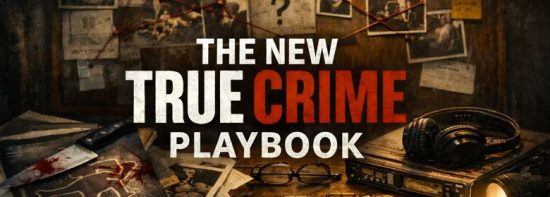
The Formula
Those visual cues in every trailer—the desaturated colors, the drone photography, the brooding soundscapes—aren’t creative bankruptcy. They’re signaling the audience: this is “prestige True Crime,” not the mass-produced series of the linear era.
The formula is evolutionary, emerging over just the last few years as the genre adapted to new platforms and business models.
And here’s the thing: audiences around the globe like the formula. Those breathless promises of “shocking” revelations and “exclusive” footage justify spending an evening with a new documentary. But the predictable structure delivers the real appeal: you know exactly what kind of experience you’re going to get.
Important to note that these aren’t “investigative” documentaries in the 60 Minutes or Frontline or BBC Panorama tradition. They’re “stories of investigations”—recaps of cases already solved or gone cold. The difference matters: one breaks news, the other retells it as a compelling, cinematic “around the campfire” tale.
Why It Works
True Crime viewers don’t want radical innovation. They want a new story—the Karen Read trial, the Idaho murders investigation—or new ways of telling or revisiting a familiar story, like Jeffrey Dahmer or Ted Bundy, told with cinematic flair and the promise of new insights.
This is content engineered for a reliable audience, not necessarily Emmy wins or cultural dominance. In fact, the sameness isn’t the problem… it’s the whole point!
Caitlin’s latest survey
- True Crime: They’re All Doing It! 20 New Projects 2026 January 19
Previous True Crime Roundups
- #1 includes The Tinder Swindler.
- #2 leads with Worst Roommate Ever.
- #3 features Sex, Lies and the College Cult.
- #4 features Mumbai Mafia.
- #5 starts with Quiet On Set.
- #6 leads with Who is Luigi Mangione?
Plus, original analysis from StoryCentric’s Ed Hersh
- True Crime Update: Ed Hersh’s Expert Takeaways (2025)
- True Crime All the Time: Bulk Gives Way to Bespoke
- True Crime Booms: What Producers Need to Know Before They Pitch. A Pact UK Webinar
About Ed Hersh
Ed Hersh is a strategist, consultant, and thought-leader specializing in the development, storytelling, and execution of True Crime and factual programming.
As founder and chief creative officer of StoryCentric, he advises networks, producers, platforms on shaping high-impact projects, drawing on senior roles at ABC News, A&E, Court TV, and Investigation Discovery. He is a frequent industry speaker, is on the faculty at Syracuse University’s Newhouse School, and serves as a strategic advisor to Canada’s Trade Commissioner Service.
Feel free to contact him at [email protected]